Emergency Preparedness

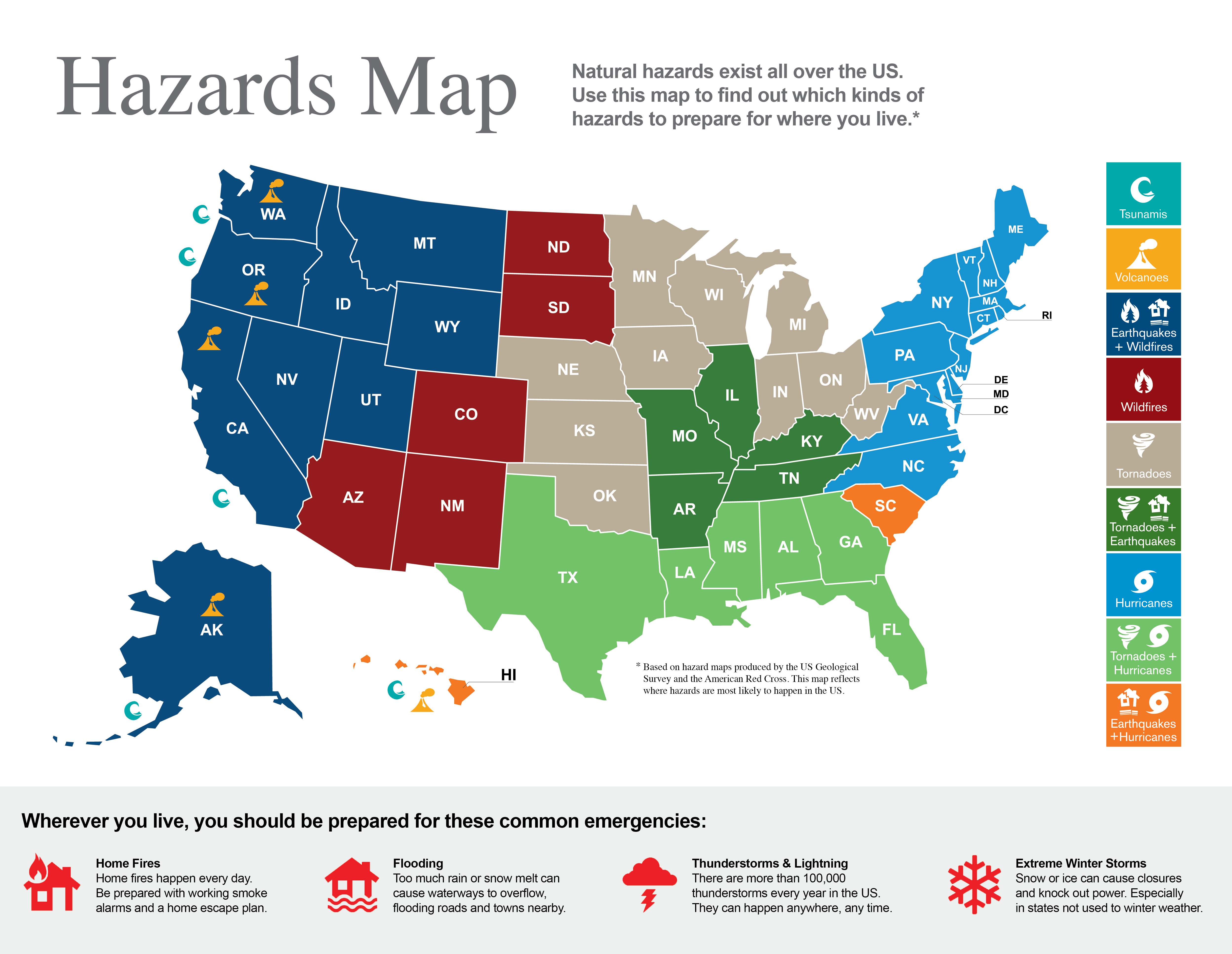
Whether you're living in California, Oklahoma, Virginia, or Alaska, every posting comes with different natural hazards. A few minutes of preparation today can make a significant difference during an emergency.

KNOW YOUR RISKS

Understand the risks you and your family may face while OUTCAN. Know how and when to take action before, during, and after different hazards and familiarize yourself with your Chain of Commands action plan!


MAKE A PLAN

  1. Create a communications plan
    Keep important phone numbers written down (not just saved on your phone)
  2. Prepare a "Go-Bag"
    Items will vary household to household, but consider the following:
    • Critical identification (passports, driver's licences, military ID cards)
    • Important documents (insurance information, medical records, emergency contacts)
    • Prescription medications and a basic first aid kit
    • Bottled water (or a water purifier, such as a LifeStraw)
    • Non-perishable food (enough for at least 72 hours, such as protein or granola bars)
    • Mobile phone chargers and portable battery packs
    • Cash (small bills where possible)
    • A change of clothing and sturdy footwear
    • Toiletries and personal hygiene items
    • A whistle and multi-tool
    • Essential items for children or pets, as applicable

      This is by no means an exhaustive list but a starting point. The contents of your Go Bag should be tailored to your family’s unique needs (pets, children, disabilities, etc.) - visit www.ready.gov/kit to continue building your Go-Bag!   
  3. Back-up your data  
    Make sure important files are safeguarded and all in the same place for easy portability (think passport, visa, birth certificate, rental agreement, medical information, household inventory, insurance policies, etc.)

TAKE ACTION

Put your plan into action. Be ready and able to face disasters, no matter where you are and when they occur. It is important to get the insurance you need and understand your coverage options. Moreover, make an extra copy of your household inventory and protect your property by considering how to minimize damage. 

  1. Complete or update your CFMWS US Welcome Form 
  2. Sign up for local emergency alerts and warnings
  3. Review your insurance coverage to ensure it reflects the hazards common in your area
  4. Check and refresh your Go-Bag every six months
  5. Kickstart your emergency fund with SISIP Financial